For Clinicians
Carbonhand is designed to support patients who have preserved intention to grasp but insufficient strength or endurance to perform functional activities independently.

Carbonhand is designed to support patients who have preserved intention to grasp but insufficient strength or endurance to perform functional activities independently.
Many individuals with neurological, neuromuscular, orthopedic, or age-related conditions experience reduced grip strength and limited endurance in the hand, despite retaining the ability to initiate voluntary movement.
These patients often:
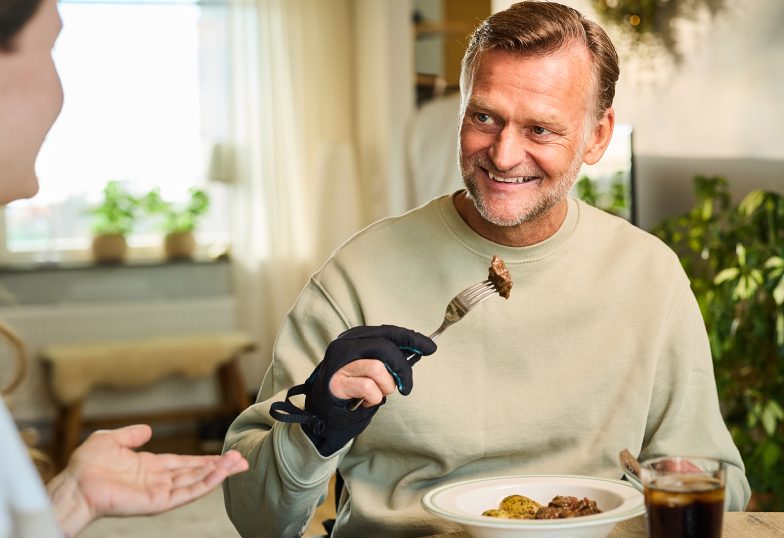
Carbonhand is designed to support patients who have preserved intention to grasp but insufficient strength or endurance to perform functional activities independently. By providing intention-controlled grip assistance during activity, Carbonhand addresses the gap between motor ability and functional performance, enabling patients to engage in meaningful tasks at home, at work, and in the community.
Carbonhand is beneficial for patients who:
Carbonhand is generally not beneficial for patients who:
It is always the individual's conditions and needs that determine whether Carbonhand is appropriate. Contact Us to find out if Carbonhand would be beneficial for your patient.
[Hide]

Carbonhand is designed to improve functional performance in real-world activities, not just grip strength in isolation. By providing intention-controlled assistance during grasp, the device enables:
Many patients are able to re-engage in meaningful activities at home, at work, and in leisure contexts that were previously difficult or impossible due to limited hand strength or endurance.
Hundreds of people have been helped by Carbonhand to regain independence and perform daily activities that would have been impossible without Carbonhand. Below are a few examples of the difference Carbonhand can make.
Terry was diagnosed with ALS. Despite the challenges, he stayed determined to remain active, connected, and independent.
LadyHawk was diagnosed with MS and losing hand strength, she regained function, confidence, and independence with the help of Carbonhand.
John has inclusion body myositis, which has caused him to lose 90% of his grip strength. Watch him try the Carbonhand for the first time.